


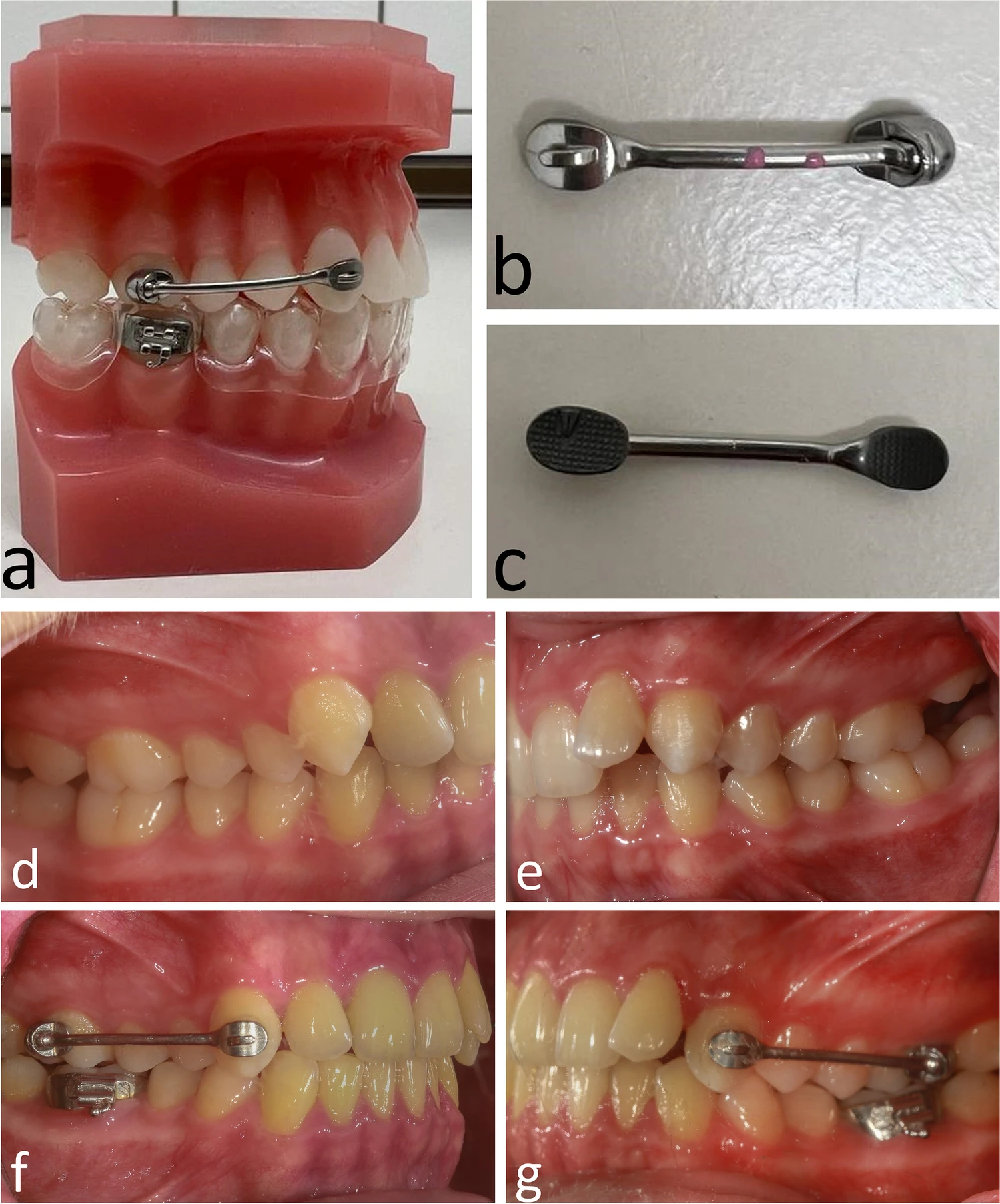
The Carrière Motion 3D™ appliance (CMA) is a technique for molar distalization and correction of class II malocclusion.
It was created in 2004 by Luis Carrière and has advantages such as easy insertion and removal, low invasiveness, and a slim design and size. This study examined the three-dimensional effects of CMA by overlaying digital models and cephalometric radiographs of 16 patients treated with CMA and class II elastics.
The mean distalization of the upper first molars was 0.96 ± 0.80 mm, while the distal inclination and mesialization of the lower first molars was 1.91 ± 1.60 mm. In addition, CMA produced a moderate correction of the skeletal class II relationship (ANB: –0.71 ± 0.77°; Wits: –1.45 ± 2.52°).
Study results
Overall, the results demonstrated that CMA is an effective treatment for class II malocclusions. Kircelli et al. (2019) estimated the sample size using a pilot study and a G-Power analysis. Excel (Excel 2013, Microsoft, USA) and GraphPad Prism were used for statistical evaluation. (Graph-Pad Software, USA). In descriptive statistics, the mean values and standard deviations are presented.
The CMA was used for a mean of 11.85 ± 4.70 months, and the occlusion changed by 3.45 ± 2.70 millimeters. The mean distalization of the first molars was 0.96 ± 0.80 mm, and there were no changes in the vertical position of the molars. Intraclass correlation coefficients (ICCs) demonstrated good interindividual and intraindividual agreement, and cross-sectional changes were significant.
The CMA caused considerable mesialization of the upper canines and first molars, as well as tipping of the lower first molars. According to this study, the Carriere distalizer (CMA) can effectively correct class II malocclusion within three-quarters to one year.
Conclusion of the studies on the Carriere Motion 3D (CMA)
Occlusal correction is not facilitated by pure distalization, but by three-dimensional effects such as distalization of upper molars, mesialization of lower molars, and skeletal effects.
Compared with the control group, the results demonstrated a significant reduction in the distance between the maxillary first molars and canines and the pterygoid vertical (distalization) and significant disto-angulation.
When used after the pubertal growth apex, CMA has minimal effect on the sagittal skeletal relationships of the mandible. Patients with a horizontal or neutral growth pattern are better candidates than those with a vertical growth pattern. Despite the use of an Essix retainer, we observed protrusion of the mandibular incisors.